PARTICIPATING LABS
Garcia Arcos, Juanma
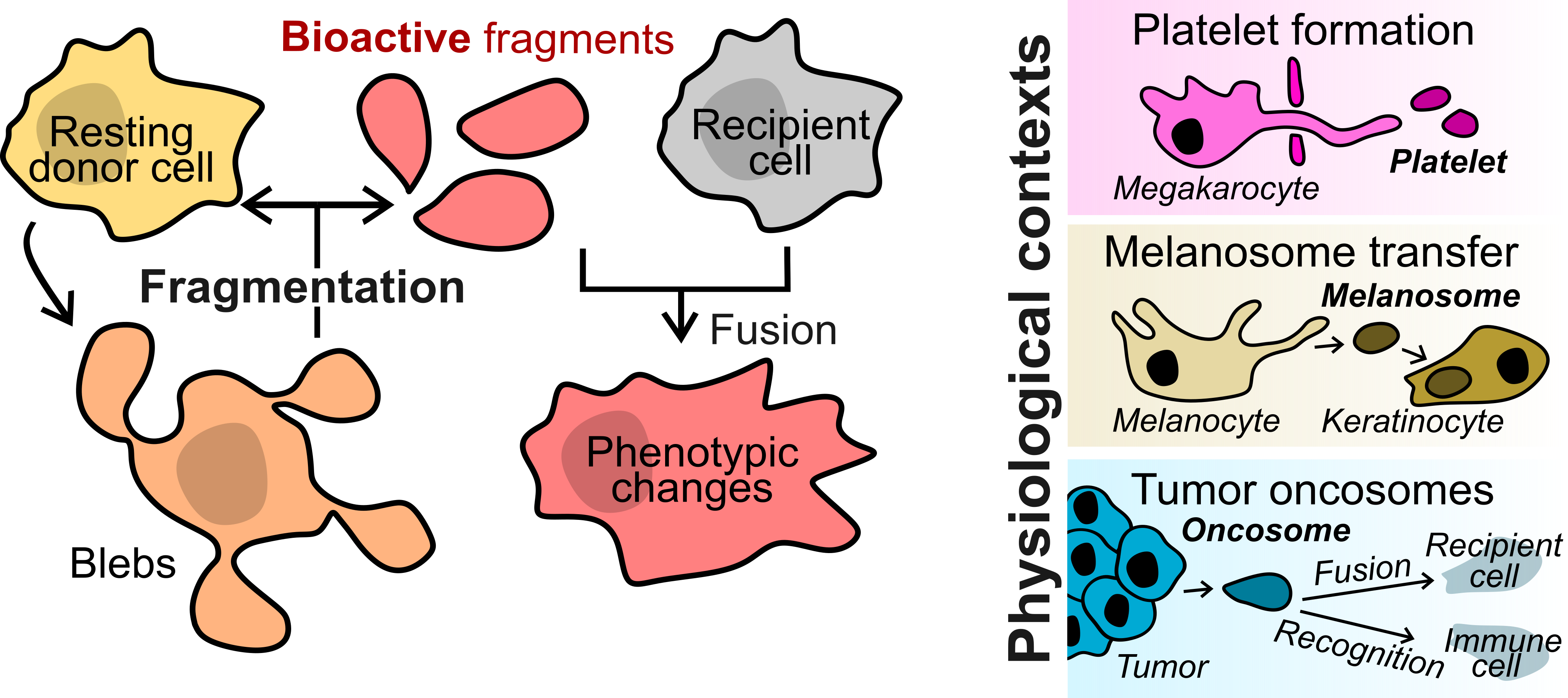
Our research lies at the interface of cell biology, biophysics, and cancer research. We study how cells break into pieces under certain mechanical constraints. We call this cell fragmentation: the production of biologically active cell fragments driven by actomyosin contractility, membrane remodeling, and scission. This phenomenon appears in several biological contexts and may play important roles in cancer progression, cell communication, and immune interactions. Our goal is to uncover the molecular and physical principles that make cells fragment, and to understand how this process shapes the behavior of both donor cells and the fragments they produce. To do so, we combine quantitative live-cell imaging, membrane mechanics, microfluidic tools, and reconstitution-inspired approaches.
Key technologies
- Microfluidics
- live-cell and quantitative fluorescence microscopy
- confocal FLIM
- membrane tension probes
- biophysical perturbation assays
- image analysis
- cell and cancer biology assays
Key biological questions
- How do cells partition outside of conventional mitosis?
- How do membrane mechanics, actomyosin forces, and membrane scission cooperate to drive fragmentation?
- How are cytoplasmic and membrane components partitioned during fragmentation?
- What roles do cell fragments play in cancer progression, intercellular communication, and immune modulation?
Contact
Juan Manuel García-ArcosGroup leader at Cell Dynamics Lab
SNF Ambizione group hosted by the Research unit of Prof Gönczy
ISREC, School of Life Sciences, EPFL
Lausanne, Switzerland
Focus areas
EPFL
CH-1015 Lausanne
T +41 21 693 11 11
Follow EPFL on social media